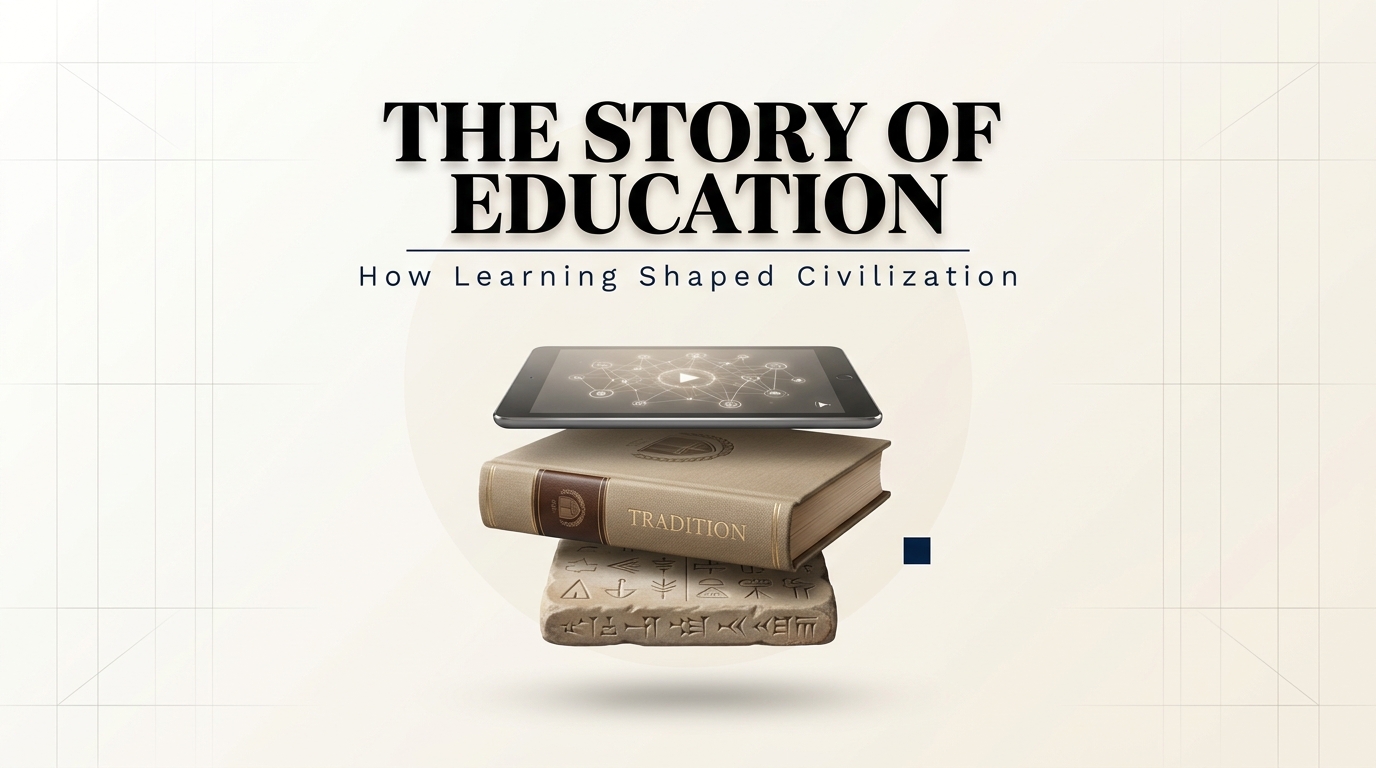

The Story of Education The story of education is the story of humanity itself. For from the earliest moments when human beings began to gather …


The Story of Education The story of education is the story of humanity itself. For from the earliest moments when human beings began to gather …
The story of education is the story of humanity itself. For from the earliest moments when human beings began to gather around, fires carve tools and form communities. There has been a need to pass on knowledge, skills, and wisdom to the next generation.
Long before formal schools existed, education was rooted in survival. Early humans taught their children how to hunt, fish, gather fruits, build shelters, and make fire. Knowledge was transmitted orally through demonstration and imitation and through the shared stories and rituals that kept communities bonded together.
In this prehistoric world, education was not separated from life. It was life itself, a continuous process of learning by doing, by observing, and by experiencing.
As societies grew more complex with the development of agriculture around 10,000 years ago, education also changed. Farming required the knowledge of seasons, soil, irrigation, and the domestication of animals. Communities began to specialize, and roles like farmer, potter, weaver, and healer emerged.
With specialization came the need for apprenticeship where children would learn a craft directly under the guidance of elders. This was the beginning of structured education though still informal and closely tied to practical life.
The earliest civilizations Mesopotamia, Egypt, the Indis Valley and China were also the earliest to create formal systems of education.
In Mesopotamia where writing was invented around 3200 B.CE. CE the Samrians established schools known as edabuzas or tablet houses where boys were trained to become scribes. These scribes learned to read and write tunia form to perform arithmetic and to record trade transactions, religious texts and laws.
Education was seen as the privilege of the elite especially those destined to serve in temples or royal courts.
In ancient Egypt, education was similarly centered on literacy, especially hieroglyphic and hieratic scripts and was deeply tied to religion and government administration. Priests and scribes were among the most educated members of society and their training ensured the continuity of religious rituals, monumental architecture and bureaucratic organization.
Meanwhile, in the Indis Valley, although fewer written records survive, archaeological evidence suggests that urban planning, standardized weights and measures, and trade required systems of knowledge transfer that must have included some form of structured education.
In China, under the Shang and Joe dynasties, education was closely tied to Confucian ideals that emphasized moral development, respect for elders, and social harmony. By the first millennium B.CE, the Confucian classics became central to Chinese education, shaping the philosophy of learning for over 2,000 years.
In Greece, education took on a more philosophical and civic character. The Greeks valued not only practical skills, but also intellectual cultivation, which they called pedia. Boys in Athens were taught:
All aimed at shaping well-rounded citizens.
In Sparta, however, education was militaristic, designed to produce disciplined warriors loyal to the state. Philosophers like Socrates, Plato, and Aristotle profoundly influenced the concept of education, stressing dialogue, inquiry, and the pursuit of truth. Plato’s academy founded around 387 B.CE is often regarded as the first university-like institution while Aristotle’s lysum further advanced systematic inquiry in science logic and ethics.
Education in Rome was initially more practical, focused on farming, military skills, and civic duties. But as Rome expanded, it absorbed Greek educational traditions. Wealthy Roman families hired Greek tutors, and schools began to emphasize grammar, rhetoric, and philosophy, preparing young men for careers in politics and administration. The Roman education system thus combined pragmatism with intellectual training, leaving a legacy that shaped European schooling for centuries.
With the rise of Christianity and later Islam, education became increasingly tied to religion.
In the middle ages in Europe, monasteries and cathedral schools preserved classical texts and taught Latin, theology, and basic literacy. Education during this period was largely restricted to clergy and the elite, but it played a vital role in maintaining intellectual life through turbulent centuries.
By the 12th and 13th centuries, the first universities emerged in Bologna, Paris and Oxford, originally as guilds of students and teachers. These institutions taught:
The university model spread rapidly, laying the foundation for higher education as we know it today.
Meanwhile, in the Islamic world, education flourished in Madras and centers of learning like Baghdad’s house of wisdom. Scholars such as Al Farabi, Avisa and Aros studied philosophy, medicine, mathematics, and astronomy, preserving and expanding upon Greek knowledge while making original contributions that influenced both the Islamic and European worlds.
In China, the imperial examination system formalized during the Tang and Song dynasties created a highly structured meritocratic path to government service, emphasizing mastery of Confucian texts. This system lasted for over a thousand years, making China one of the most examinationdriven educational cultures in history.
The Renaissance in Europe revived interest in classical knowledge, arts, and sciences. Education expanded beyond theology to include humanism with thinkers like Arasmus and Petrarch advocating for the study of literature, history, and philosophy as a means to cultivate moral and intellectual virtue.
The invention of the printing press by Johans Gutenberg in the mid- 15th century revolutionized education by making books more widely available and affordable, breaking the monopoly of handwritten manuscripts. This democratization of knowledge allowed ideas to spread rapidly, fueling the reformation, the scientific revolution, and the enlightenment.
Martin Luther’s call for literacy so that individuals could read the Bible in their own languages accelerated. the spread of schooling across Protestant Europe.
In the 17th and 18th centuries, philosophers such as John Lach and Jeang Jacqu Rouso emphasized education as a means to shape human nature and society while enlightenment thinkers like Voltater and Dedo promoted reason, science and secular learning. This intellectual fervent laid the groundwork for modern systems of public education.
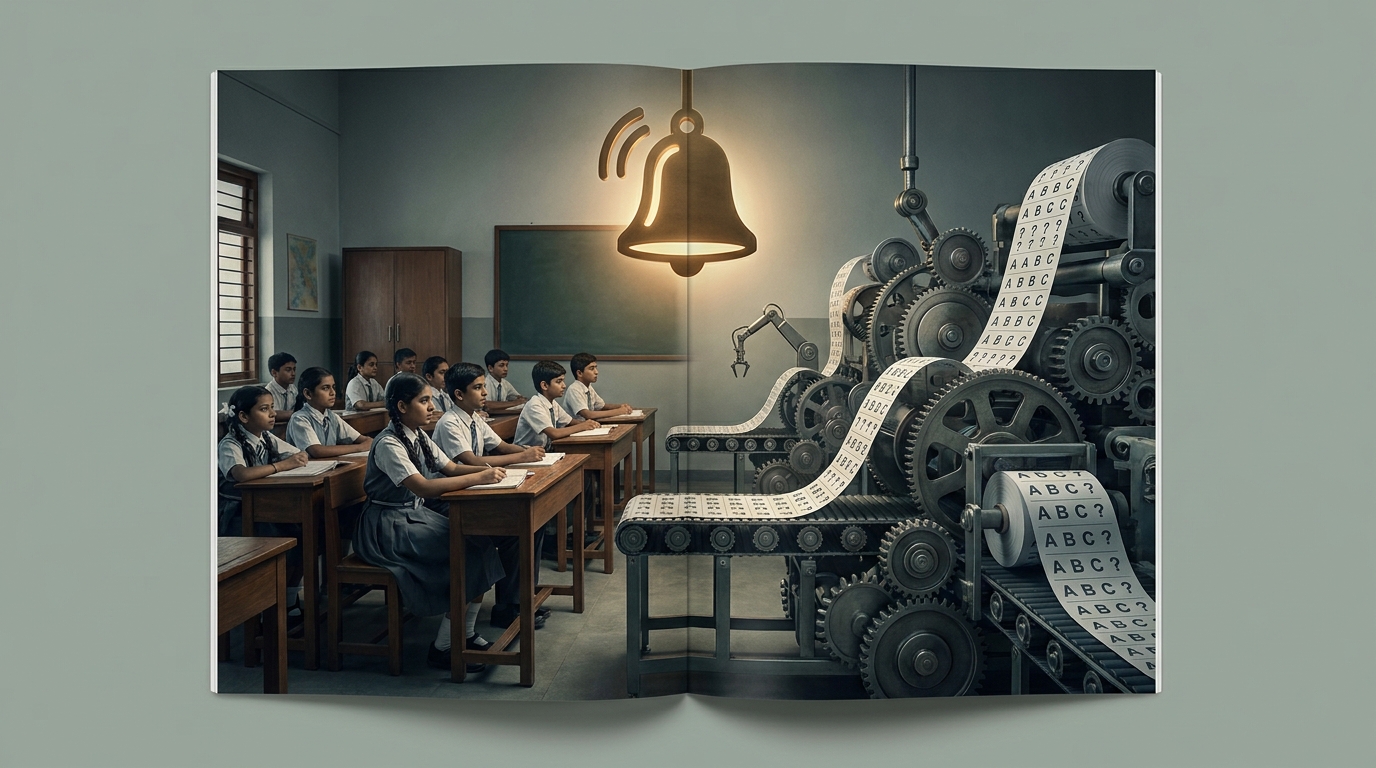
The industrial revolution in the 18th and 19th centuries transformed education in profound ways. Rapid urbanization and the need for literate and disciplined workers led governments to expand schooling. Mass education systems emerged with compulsory primary education becoming standard in many countries by the late 19th century.
Schools emphasized:
In the 20th century, education became a universal right. Following the devastation of two world wars, governments and international organizations recognized education as essential for peace, progress, and equality. The United Nations Universal Declaration of Human Rights in 1948 affirmed the right to education for all.
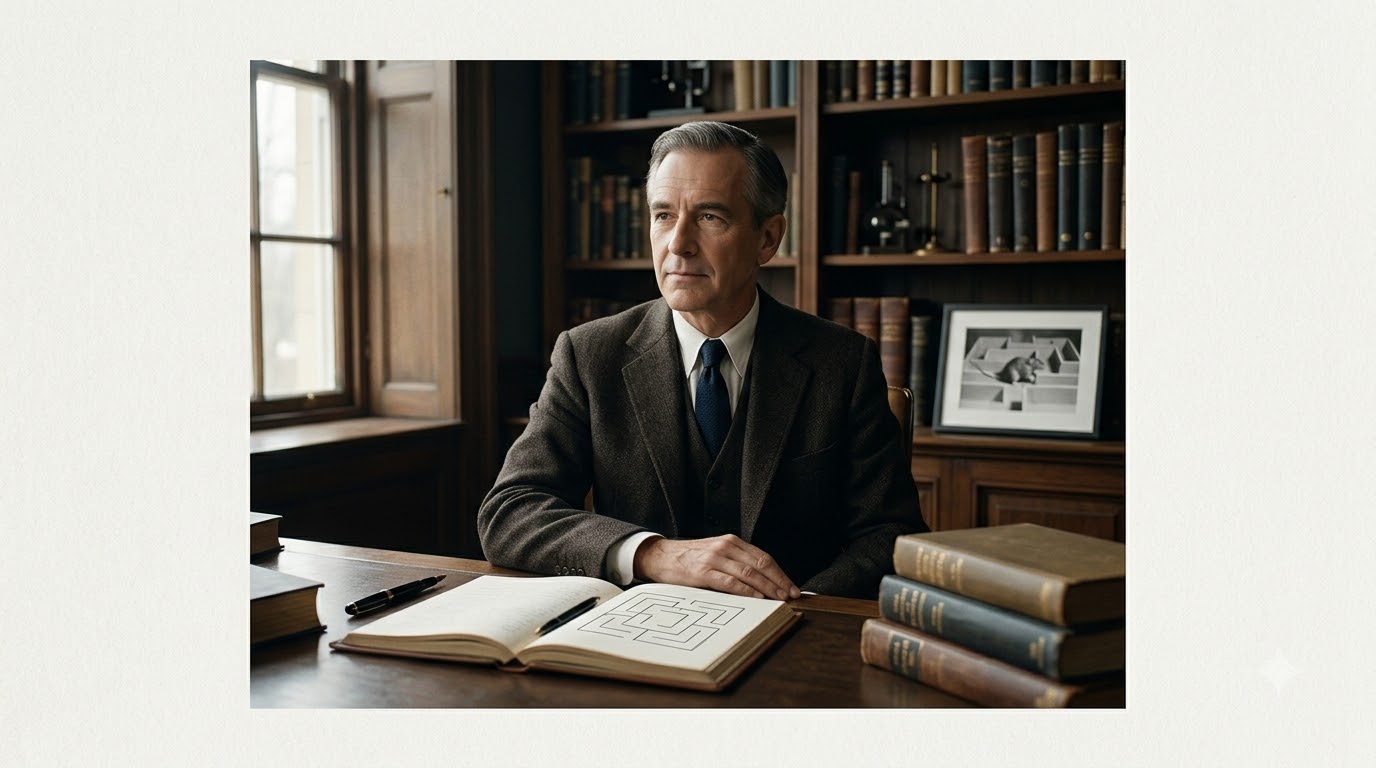
In many countries, secondary education became mandatory and higher education expanded dramatically. New teaching methods emphasized creativity. critical thinking and problem solving rather than wrote memorization. Psychological theories by Jeang Pia, Lev Vagotssky and later Howard Gardner influenced classroom practices focusing on stages of development, social learning and multiple intelligences.
The rise of technology also transformed education. Radio and television brought educational programs into homes, while computers in the late 20th century opened new possibilities for learning. In the late 20th and early 21st centuries, the internet revolutionized education further, making information instantly accessible and giving rise to online courses, distance learning and massive open online courses, MOOs. Education has become more globalized with international collaboration, student exchanges, and online communities breaking down geographic barriers.
Yet, education has never been without challenges. Access remains unequal with millions of children worldwide still lacking basic schooling. Debates continue over what should be taught, how it should be taught, and who should control education. In many countries, issues of equity, inclusion, and relevance dominate the discourse.
As educators seek to prepare students not only for jobs, but for citizenship, personal growth, and participation in a rapidly changing world, the CO 19 pandemic of 2020 highlighted both the potential and the limitations of digital education. While online platforms allowed many students to continue learning, the digital divide exposed inequalities in access to technology and internet connectivity. At the same time, the crisis underscored the resilience and creativity of teachers and students adapting to unprecedented circumstances.
Looking at the long arc of history, the story of education is one of expansion and transformation. What began as the simple passing of survival skills has evolved into a global enterprise involving millions of institutions and billions of learners. From oral traditions to online learning, from apprenticeship to artificial intelligence, education has constantly adapted to the needs and values of society.
Today, education faces new frontiers, preparing young people for jobs that do not yet exist, teaching them to navigate complex global challenges like climate change, inequality, and technological disruption, and fostering a sense of shared humanity in an interconnected world. The future of education may involve personalized learning powered by artificial intelligence, virtual reality classrooms, and lifelong learning opportunities that continue far beyond childhood and adolescence.
But at its core, education remains what it has always been, the bridge between generations, the means by which human beings transmit knowledge, values, and dreams, and the foundation upon which civilizations are built.
Thus, the story of education is not finished. It continues to unfold every day in classrooms, homes, and digital spaces around the world. It is a story written not only by philosophers, teachers, and reformers, but by every parent who teaches a child, every student who learns something new, and every community that values the power of knowledge. Education is both the memory and the future of humanity, the most enduring invention of our species and perhaps our greatest hope for a better world.
Keep in touch with our news & offers
Thank you for subscribing to the newsletter.
Oops. Something went wrong. Please try again later.