
Kohler’s Insight Learning Theory is a major contribution to Gestalt psychology and explains learning as a sudden understanding of relationships within a situation. This theory, also known as Insightful Learning, was proposed by the German psychologist Wolfgang Köhler. It emphasizes that learning occurs through insight rather than through mechanical trial-and-error processes.Gestalt psychology, with which this …
Kohler’s Insight Learning Theory: Gestalt Psychology and Experiments on Chimpanzees
Kohler’s Insight Learning Theory is a major contribution to Gestalt psychology and explains learning as a sudden understanding of relationships within a situation. This theory, also known as Insightful Learning, was proposed by the German psychologist Wolfgang Köhler. It emphasizes that learning occurs through insight rather than through mechanical trial-and-error processes.
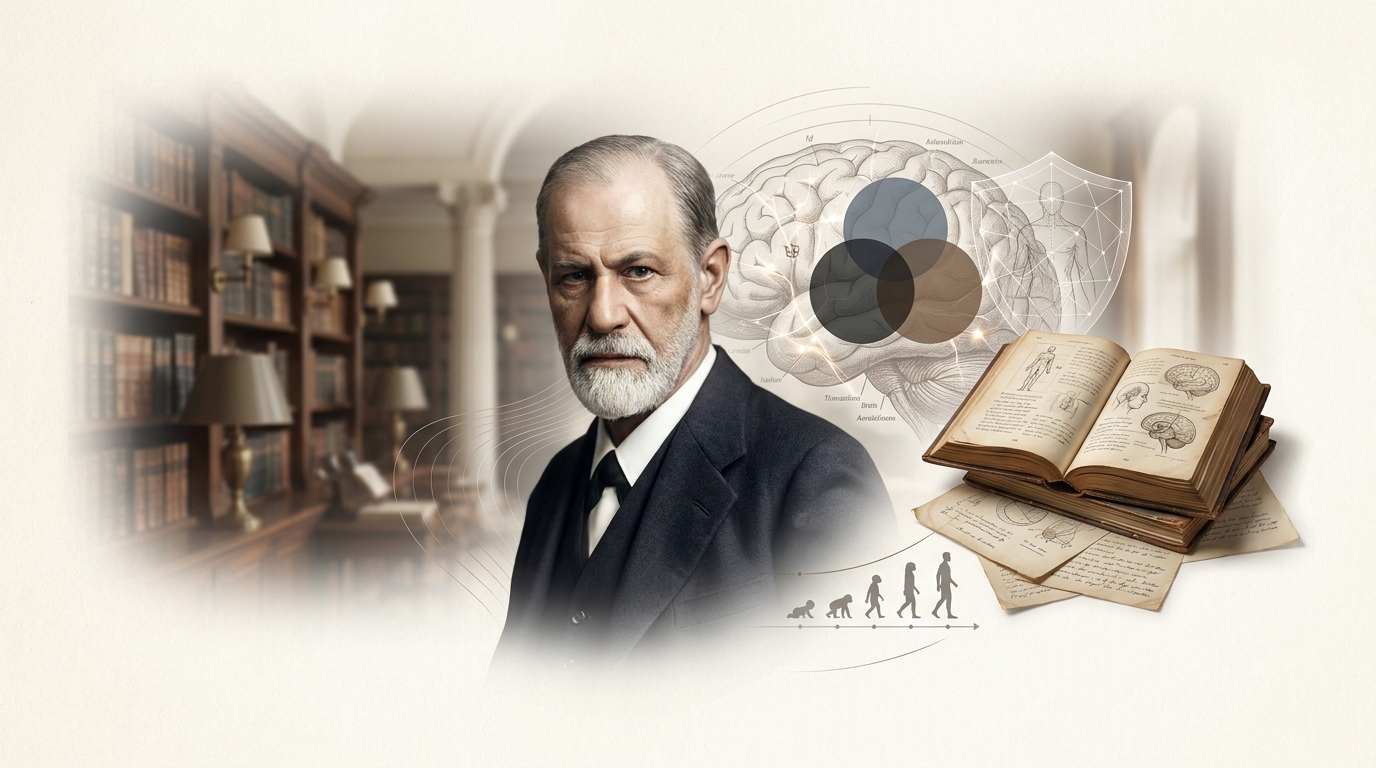
Gestalt psychology, with which this theory is closely associated, originated in Germany. The term Gestalt refers to a “whole,” and Gestalt psychologists believed that the whole is more important than the individual parts. According to this perspective, learning involves perceiving relationships within a complete situation rather than focusing on isolated elements.
Gestalt Psychology and the Concept of the Whole
Gestalt psychology emphasizes understanding a situation as an organized whole. Instead of examining separate parts independently, it focuses on how parts relate to one another within a complete structure.
For example, in teaching, a teacher may first provide an overview of a topic before explaining its detailed components. When introducing a concept such as a flower, the teacher may first present the entire flower and then explain its different parts. This approach reflects the Gestalt belief that understanding the whole enables better comprehension of the parts.
Similarly, learning is viewed as a comprehensive and integrated process. It is not limited to discussing a single part in isolation. The theory highlights:
- The relationship between elements in a situation
- The importance of individual awareness
- Awareness of one’s environment
- Integration of previous knowledge and experience into new learning
Learning is therefore seen as an organized and meaningful process rather than a series of disconnected responses.
Rejection of Trial and Error
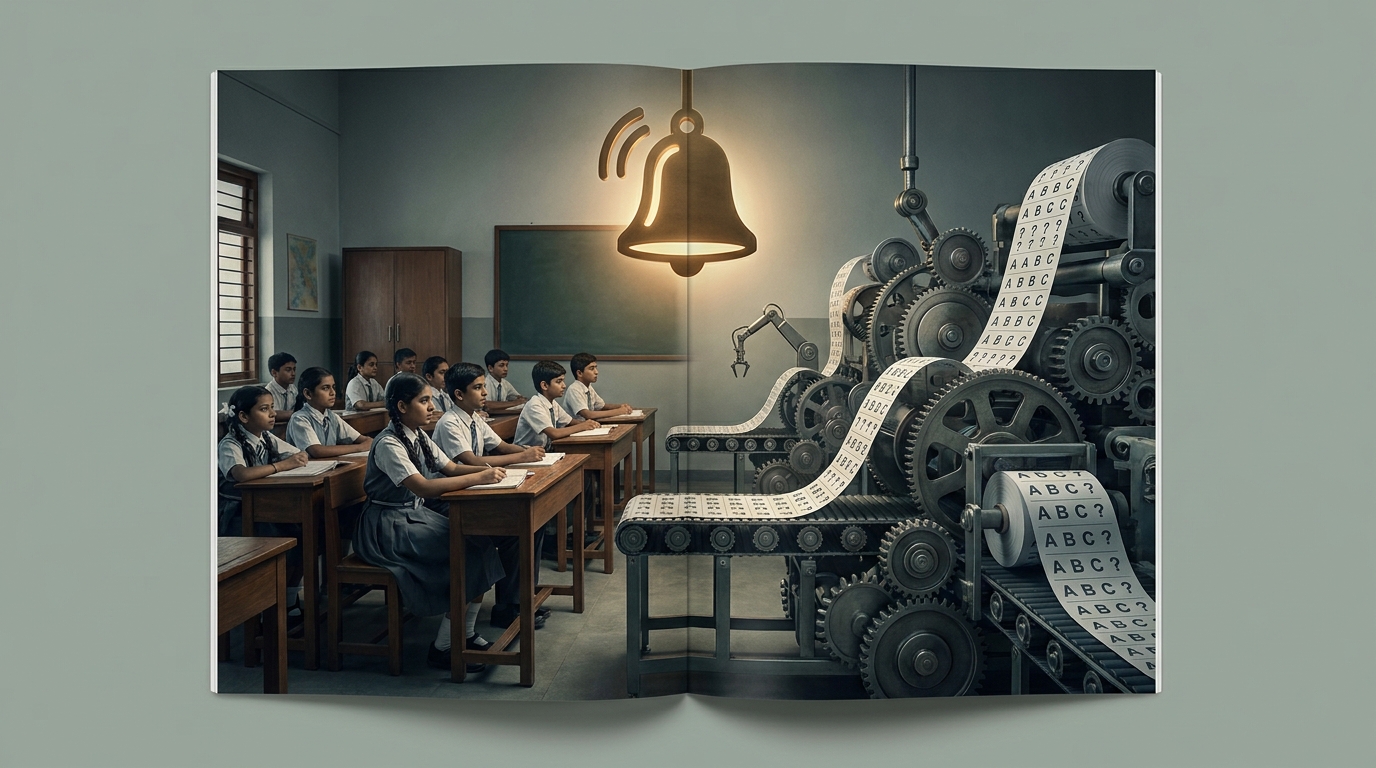
Gestalt psychologists rejected the trial-and-error theory of learning. They argued that learning does not occur merely through repeated attempts and gradual elimination of errors.
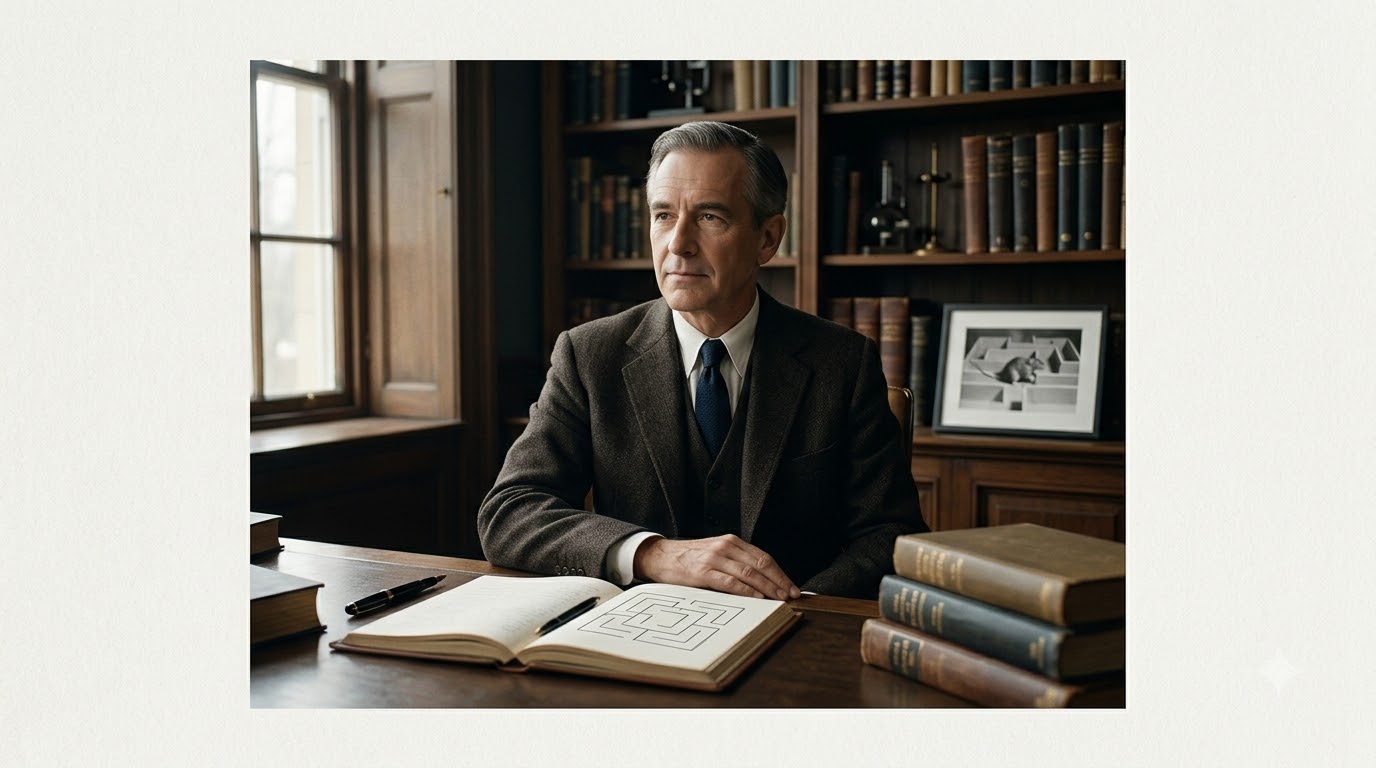
Another psychologist who rejected trial-and-error learning was Edward Tolman, whose sign learning theory also emphasized cognitive processes.
According to Gestalt psychologists, when an individual encounters a situation, the mind actively processes information. Learning involves internal cognitive organization rather than mechanical repetition.
Wolfgang Köhler and the Origin of Insight Learning
Wolfgang Köhler developed Kohler’s Insight Learning Theory through experiments primarily conducted on chimpanzees.
Between 1913 and 1920, Köhler carried out experiments in the Canary Islands, where he was working at the time. In 1925, he published his findings in the book The Mentality of Apes. The book was based on the experiments conducted during those earlier years.
The experiments were not limited to a single chimpanzee; several chimpanzees were observed. However, one chimpanzee named Sultan is most frequently associated with these experiments.
Köhler concluded that the highest form of learning is insight.
Meaning of Insight
Insight refers to a sudden understanding of the solution to a problem without the use of trial and error.
It is characterized by:
- Sudden realization
- Immediate perception of relationships
- No reliance on repeated unsuccessful attempts
When a problem is being faced and, after a period of reflection, the solution suddenly becomes clear, that moment is called insight. This experience is often described as an “Aha” moment or “Eureka,” meaning “I have found it.”
Köhler believed that many discoveries and inventions arise from such insight.
Köhler’s Experiments on Chimpanzees
Köhler conducted several experiments to demonstrate insight learning. Three experiments are particularly well known.
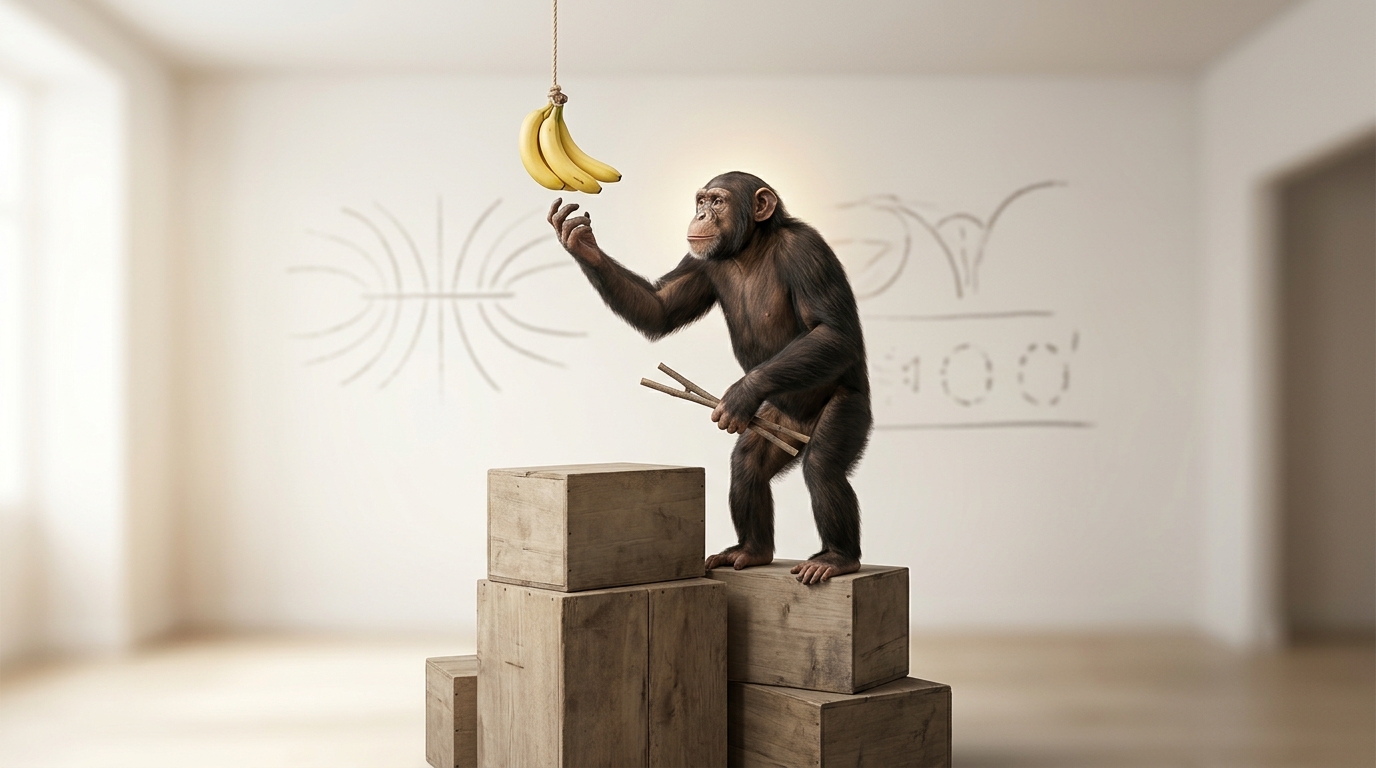
1. The Box and Banana Experiment
In this experiment:
- A chimpanzee was kept hungry for some time.
- It was then placed inside a cage or room.
- Bananas were hung from the ceiling, out of its reach.
- A box was placed inside the cage.
Initially, the chimpanzee tried unsuccessfully to reach the bananas. After some time, it suddenly used the box by placing it under the bananas, stood on it, and successfully obtained them.
This sudden solution indicated insight rather than trial-and-error learning.
2. Stacked Boxes Experiment
In a variation of the first experiment:
- The bananas were hung even higher.
- Two or three boxes were placed inside the cage.
The chimpanzee initially failed to reach the bananas. After some time, it stacked the boxes one over the other, climbed up, and obtained the bananas.
This demonstrated a more complex form of insight involving the perception of relationships between objects.
3. The Two-Stick Experiment
In another experiment:
- Bananas were placed outside the cage.
- Two sticks were kept inside the cage.
- Each stick alone was too short to reach the bananas.
- One stick was hollow, allowing the two sticks to be joined.
The chimpanzee first attempted to use a single stick unsuccessfully. After some time, it joined the two sticks together and used them to pull the bananas closer.
This again showed insight, as the chimpanzee perceived the relationship between the two sticks and combined them to solve the problem.
Sultan: The Most Intelligent Chimpanzee
Among the chimpanzees used in the experiments, Sultan was considered the most intelligent. He was often the first to solve the problem, and other chimpanzees followed his actions.
Köhler interpreted these behaviors as intelligent problem-solving rather than accidental or random actions. He argued that the chimpanzees did not rely on trial and error but instead solved problems through insight.
Insight Versus Trial and Error
Köhler maintained that the chimpanzees’ solutions were not the result of repeated random attempts. Instead, they reflected intelligent restructuring of the situation.
He had previously experimented with dogs, cats, and other animals, but those experiments were not successful. However, he did not conclude that these animals were incapable of insight. He emphasized that unsuccessful experiments do not prove the absence of insight.
Insight learning depends on the perception of relationships within the situation.
Characteristics of Insight Learning
Suddenness
Insight occurs suddenly, not gradually.
Eureka or Aha Experience
Insight is accompanied by a feeling of discovery—“I have found it.”
Change in Perception
Insight reorganizes the individual’s perception of the problem.
Role of Past Experience
Previous knowledge and experience play an important role in insight learning.
Dependence on Observation and Intuition
Insight relies on careful observation and intuitive understanding rather than mechanical repetition.
Factors Affecting Insight Learning
Several factors influence insight learning:
- Age
- Intelligence
- Maturity
- Learning situation
- Past experiences
- Environmental conditions
Insight is related to the intellectual level of the individual. Higher intellectual capacity and maturity enhance the ability to perceive relationships quickly.
Insight Learning and Associative Learning
Insight learning is related to associative learning in that it involves connecting one element with another. However, unlike blind association or mechanical repetition, insight involves understanding meaningful relationships within the whole situation.
Gestalt psychology emphasizes viewing the situation as a complete structure rather than focusing on isolated parts.
Educational Implications
Kohler’s Insight Learning Theory suggests that:
- Learning should focus on understanding relationships.
- Problems should be approached logically and intelligently.
- Blind mechanical trial-and-error methods should be avoided.
- The learner should perceive the situation as a whole before analyzing parts.
Drive and motivation play a central role in learning. In Köhler’s experiments, hunger served as a motivating factor that led the chimpanzee to engage in intelligent problem-solving.
When presenting learning material, teachers should first introduce the whole structure of the subject and then explain its components. Insight leads to intelligent responses rather than mechanical actions.
Kohler’s Insight Learning Theory remains a foundational concept in cognitive and educational psychology, emphasizing intelligent problem-solving through sudden understanding rather than mechanical repetition.

Raj Malhotra
Raj Malhotra is an education enthusiast, aspiring educator, and founder of EDUCARE Society. He is passionate about leveraging technology to improve education, create innovative learning resources, and empower students and future teachers through accessible, high-quality educational content.
Subscribe to Our Newsletter
Keep in touch with our news & offers
Thank you for subscribing to the newsletter.
Oops. Something went wrong. Please try again later.