
Understanding Sigmund Freud's psychological theories requires examining three primary concepts: the psychosexual stages of development, the structural theory of personality (often referred to as psychoanalytic …
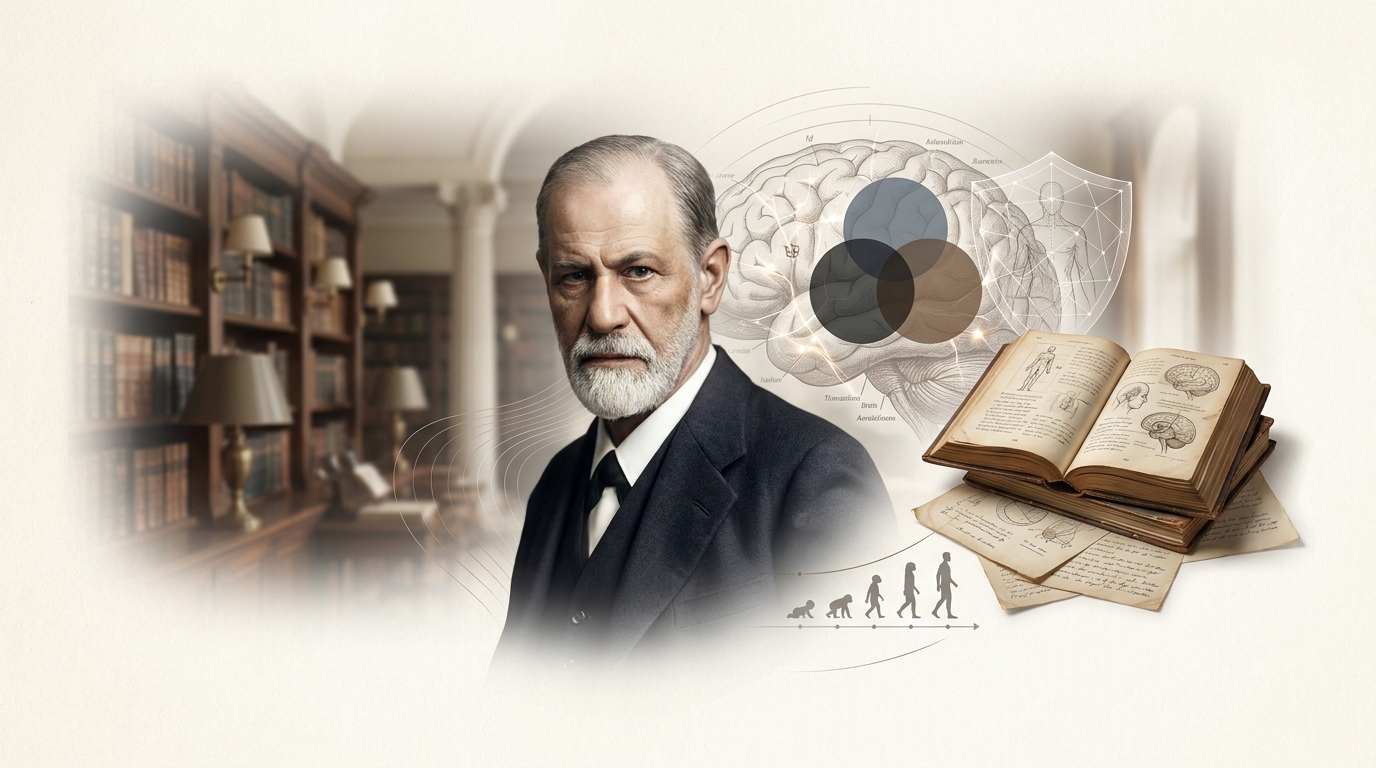
Understanding Sigmund Freud’s psychological theories requires examining three primary concepts: the psychosexual stages of development, the structural theory of personality (often referred to as psychoanalytic theory), and defense mechanisms. Studying these concepts collectively makes it easier to connect the ideas and comprehend them thoroughly. Grasping how one theory relates to another eliminates confusion, especially when analyzing statements or solving problems for competitive entrance exams.
Exploring Sigmund Freud's Psychological Theories
A central term in Freud’s work is “libido,” which refers to the sex drive or the desire for physical pleasure. This drive plays a critical role in shaping a person’s preferences, reactions to situations, and interpersonal relationships throughout their life. The libido is influenced by multiple factors and forms the foundational basis for Freud’s developmental stages.
The Psychosexual Stages of Development
The psychosexual stages outline how early childhood experiences impact an individual throughout adulthood.
- Oral Stage (0 to 1.5 Years): The primary focus of development is on the mouth, where the infant derives pleasure through oral activities like breastfeeding. If a child’s needs are not met during this stage, fixation occurs. Fixation means an unresolved developmental conflict persists into adulthood. For example, a child’s natural instinct to suck can later manifest as a lifelong habit of nail-biting.
- Anal Stage: As infants grow, they are initially unable to control their physical routines. Gradually, potty training begins. In this stage, healthy toilet training gives children a sense of accomplishment because they learn to control their bodily functions. If a fixation occurs here, it leads to two extremes:
- Anal Retention: The individual becomes overly obsessed with neatness, requiring everything to be flawlessly clean, shiny, and perfectly organized.
- Anal Expulsion: The exact opposite occurs; the individual becomes highly disorganized, messy, and indifferent to their chaotic surroundings.
- Phallic Stage (3 to 6 Years): During this phase, a child develops an initial attraction toward the opposite gender, with the parents typically serving as the healthy subjects of this affection. Freud categorized this behavior using two concepts: the Electra complex (a girl’s attraction to her father) and the Oedipus complex (a boy’s attraction to his mother). At this age, sexual feelings are not expressed directly. As the child enters school, their focus shifts to interacting with family members and peers, which spurs the development of social skills.
- Latency and Puberty (12 Years and Above): Around the age of 12 and beyond, the developments from the previous stages integrate. Children begin to form peer groups more actively. As puberty hits, physical maturity develops, bringing major physiological and psychological shifts.
Criticisms of the Psychosexual Theory
Freud’s developmental stages have faced significant criticism for several reasons:
- The Taboo of Childhood Sexuality: Associating complex sexual motives with young children was highly controversial and often viewed as inappropriate.
- Neglect of Environmental Factors: Freud centered his entire theory of human development on sexuality, failing to adequately acknowledge the role of a child’s environment.
- Flawed Patient Sampling: Freud developed these universal theories by experimenting primarily on his own clinical patients, often lacking proper methodological sampling or consent.
The Structural Theory of Personality
The structural theory explains how the human mind interprets experiences. Freud proposed that the mind consists of three distinct entities—the Id, the Ego, and the Superego—which operate across the unconscious, subconscious, and conscious levels.
The Id: The Pleasure Principle
The Id operates entirely in the unconscious mind. It functions purely on the “pleasure principle,” meaning it demands instant gratification for all physical needs and urges. The Id has no concept of right and wrong; it simply wants what it wants. For instance, if an individual desires ice cream, the Id will urge them to snatch it from someone else to achieve immediate satisfaction. Freud stated that the Id is the primary part of the personality, present from the moment a child is born.
The Superego: The Morality Principle
The Superego operates in stark contrast to the Id. It represents the “morality principle” or the idealistic principle. Functioning completely in the conscious mind, the Superego continuously evaluates what is right or wrong based on societal and personal values. When the Id desires instant gratification, the Superego intervenes, pointing out moral failings (e.g., recognizing that stealing or eating excessive amounts of chocolate is wrong).
The Ego: The Reality Principle
The Ego develops during the first three years of a child’s life and is partly conscious. It operates on the “reality principle,” serving as a necessary balance between the extreme demands of the unconscious Id and the strict moral expectations of the fully conscious Superego. The Ego finds realistic solutions that partially satisfy both sides. For example, the Ego will recognize that snatching ice cream is wrong, but it will allow the individual to ask politely for a small piece, thereby fulfilling the Id’s desire while respecting the Superego’s values.
Defense Mechanisms
The human mind is predominantly unconscious. When a person faces severe stress, anxiety, or unacceptable thoughts—such as the profound grief of losing a loved one—the conscious mind often cannot cope with the reality. Unresolved trauma can severely affect an individual.
To prevent this, the unconscious mind utilizes psychological strategies known as defense mechanisms. Heavily expanded upon by Anna Freud, these mechanisms protect the Ego from anxiety by managing or masking difficult emotions.
- Displacement: Redirecting an impulse or emotional reaction from its original source to a safer, less threatening target. For example, if a boss scolds an employee, the employee cannot express anger at work. Instead, the individual unconsciously displaces that frustration by scolding their child at home over a minor issue.
- Sublimation: Similar to displacement, but this mechanism converts unacceptable or destructive emotions (like anger or aggression) into constructive, socially acceptable behaviors. For instance, an individual might channel excessive aggressive energy into competitive sports.
- Compensation: When an individual fails in one specific area, they attempt to overachieve in another. If someone fails to pass an exam, they may redirect their efforts into building a highly successful business, compensating for the academic failure with entrepreneurial success.
- Rationalization: Attempting to justify unacceptable outcomes with logical-sounding reasons or excuses. A common example is the “sour grapes” mentality, where an individual claims they never wanted a particular goal simply because it was out of their reach.
- Repression: Also known as motivated forgetting, this is the unconscious blocking of unpleasant emotions or memories to prevent feelings of guilt and anxiety. For instance, the aggressive thoughts associated with the Oedipus complex are repressed. Similarly, a person might unconsciously block out the painful memories of a severe breakup to avoid mental distress.
- Projection: Redirecting one’s own unwanted thoughts, motives, or feelings onto another person. If an individual secretly harbors hatred for someone, their Ego might project that feeling, making the individual falsely believe that the other person hates them.
- Regression: Returning to an earlier stage of development when faced with stress or problems. For example, older children might begin bed-wetting when placed in highly stressful situations, reverting to a behavior from a previous developmental stage.
- Daydreaming: Using imagination to escape reality. Instead of studying for an upcoming job exam, an individual might spend hours daydreaming about passing the test, buying a house, and achieving success, completely avoiding the actual work required to achieve those goals.
- Identification: Attempting to cope by imitating the behavior, dress, or mannerisms of a role model, such as an actor or athlete, in an effort to absorb their perceived strength or success.
- Denial: Refusing to accept a clear, objective reality because it is too painful to acknowledge. For example, someone might refuse to believe that a loved one has passed away, sitting in absolute shock. Similarly, an individual might deny that their partner is cheating, despite warnings from friends, until they witness it themselves.
- Compartmentalization: Mentally dividing conflicting parts of one’s life into separate “compartments” to prevent them from mixing. A common example is strictly separating one’s professional job from one’s personal life to avoid emotional crossover.
- Intellectualization: Dealing with a stressful situation by removing the emotion and focusing solely on intellectual analysis. If someone is diagnosed with a severe illness like cancer, instead of succumbing to depression, they might obsessively research the disease, focusing entirely on the scientific facts to avoid processing the emotional weight of the diagnosis.
- Reaction Formation: Behaving in a manner that is the exact opposite of one’s true, unconscious feelings. For example, a senior student who secretly has a crush on a junior student might bully or mock them instead of showing affection.
Subscribe to Our Newsletter
Keep in touch with our news & offers
Thank you for subscribing to the newsletter.
Oops. Something went wrong. Please try again later.